A parent’s guide to choosing
Indoor activities for kids: fit the play to your space
Indoor play works best when the room and the activity agree. Decide how much floor or table space is available, how much noise is welcome and whether you can help throughout. Then choose an idea with the right age, preparation and mess level. The goal is a manageable start, whether you have a small apartment, a shared room or a cleared kitchen table.
Browse free activity previewsStart with today
Choose a starting point
Only a tabletop is available
Drawing, a puzzle or a word game
Protect the surface as needed and check the materials list.
A safe open floor area is available
Indoor movement or building
Check clearance, footing and where the play stops.
Someone nearby is resting or working
Calm play with low mess
Agree on a quiet play area before starting.
Children want different things
Two age-appropriate choices in separate spaces
Check that you can supervise both setups.
Set one useful boundary
Show where the activity happens: the table, a cleared floor patch or another suitable area. Move fragile objects and check that everyone has room to reach materials without pushing past another child. For active games, leave stopping room as well as starting room.
Avoid treating furniture, stairs or a narrow passage as substitute play equipment. Choose an activity designed for the space you have. If the available room changes, it is simpler to change the activity too.
Choose what you can tidy today
Low mess can be a useful filter when the room has to return to ordinary use quickly. Paper, storytelling and observation activities often need less clearing away than a larger project, but check the individual card rather than assuming a whole activity type is mess-free.
Put out the listed materials for one activity. Keep a place for finished work and a place for reusable supplies so the ending is easy to explain. Children can help with suitable tidying tasks while an adult handles anything that needs care.
Give siblings separate responsibilities
One shared theme does not require identical tasks. A younger child may participate alongside an adult while an older child chooses a more involved card. Check ages and materials separately, and keep older-child tools out of a toddler's reach.
If sharing is turning into waiting, choose an option with enough materials or roles for everyone. The finder has a who-is-playing choice so you can look for ideas intended for a group or an adult and child together.
Keep the first invitation short
Offer two choices rather than reading out a long catalogue: would you like to make something or play a game? Let the child's answer narrow the next choice. Older children may prefer to browse their own age hub with you.
These previews include calm, creative, active and learning moods. Use the time and prep labels together, read the supervision reminders and stop or change direction if the setup is not working. Indoor play can be small and familiar.
From the activity library
Find a real activity to try
A varied indoor collection across ages 1–12. Every selected card lists indoors as a suitable place; individual space and supervision needs still differ.
You know your child best. Adapt or skip anything that doesn’t feel right, and supervise as noted. Read the full instructions and safety guidance before starting.
Previews are free to browse
Full steps, the tip and safety note cost 3 credits to unlock for an ordinary library card. Complete sample activities are free.

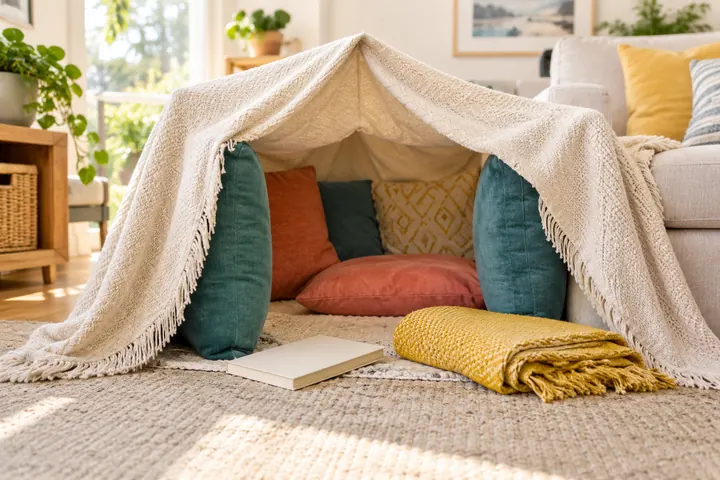
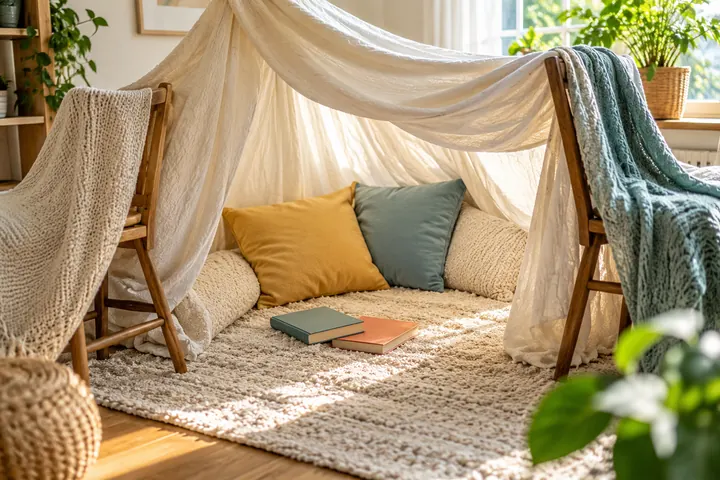
Blanket Fort Reading Nook
- 60 min
- 5 min prep
- Things at home
- Some tidying

Vinegar Volcano Variables
- 30 min
- 5 min prep
- Things at home
- Some tidying