A parent’s guide to choosing
Kids activities: choose an idea for the day you have
The useful activity is the one that fits your actual afternoon. Start with your child's age, then check the space, time and attention you can offer. A short familiar game can be a better fit than a big project when dinner is almost ready. Use this guide to narrow the choice, then open a preview to check its materials and supervision guidance.
Browse free activity previewsStart with today
Choose a starting point
Ten minutes before the next thing
A short observation, drawing or word game
Check both activity time and preparation time.
Lots of energy, little floor space
A movement idea designed for indoors
Clear a reachable play area and move breakable things.
A sibling afternoon
A shared idea with separate roles
Use the youngest child's age group as the starting point.
You need an easy reset afterwards
Low-mess play with household supplies
Put out only what this activity needs.
Use age as the first filter
An age label is a starting point for choosing, not a promise about what a child can do. For ages 1–2, plan to take part and keep the play area simple. For ages 3–4, offer one choice at a time and demonstrate the starting action. Ages 5–6 may enjoy a clear goal with room to invent.
For ages 7–9 and 10–12, ask whether they would prefer to build, make, move or puzzle something out. Offer more responsibility only when it fits the child and the card's supervision instructions. When siblings differ in age, separate small materials and let an older child have an extra role rather than assuming one setup fits everyone.
Count the whole time commitment
A 15-minute activity with preparation and cleanup is not a 15-minute gap. Before choosing, set aside time to gather supplies, explain the idea and put things away. If the clock is tight, choose a shorter card or a no-supplies option. You can repeat a favorite later instead of rushing through it.
Keep the ending clear: one round, one page or until the timer finishes. Tell children before starting if the next event is lunch, leaving the house or another family routine. It is fine to stop when the activity no longer fits.
Match the setup to your attention
Read the supervision label and hazard badges before you start. Nearby play still needs an available adult; an independent label does not mean every child or setting is suitable for unsupervised play. Choose, adapt or skip the activity based on what you can realistically supervise.
Put away materials meant for an older sibling before a younger child joins. A smaller selection is easier to manage than opening the whole craft cupboard. If a card's equipment or safety guidance does not fit your home, choose another preview.
Make a small repeatable shortlist
Choose one calm idea, one active idea and one creative idea that use things you already have. That gives you a useful starting point next time without planning every hour. Repeating a game is welcome when the children still want it.
The previews below offer a mix of ages and activity types. For a closer match, open the age hubs or use the finder to choose age, place, mood, time and who is playing. Always check the individual card rather than choosing by the picture alone.
From the activity library
Find a real activity to try
A mixed starting collection across ages 1–12. Each preview links to the actual activity card; check its age and supervision details before choosing.
You know your child best. Adapt or skip anything that doesn’t feel right, and supervise as noted. Read the full instructions and safety guidance before starting.
Previews are free to browse
Full steps, the tip and safety note cost 3 credits to unlock for an ordinary library card. Complete sample activities are free.

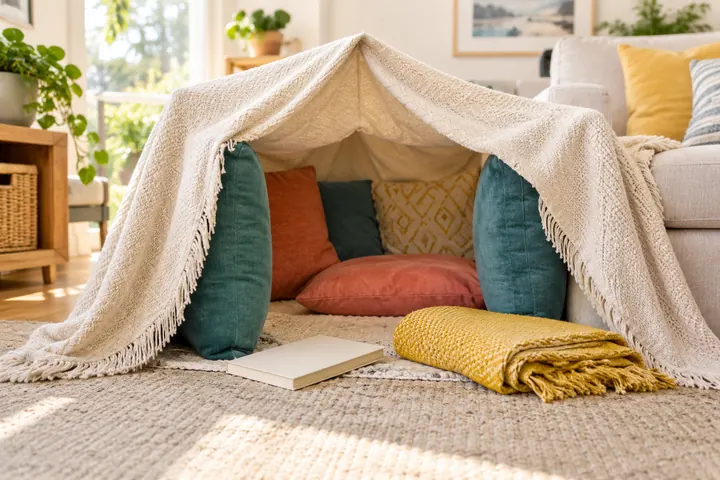

Blanket Fort Reading Nook
- 60 min
- 5 min prep
- Things at home
- Some tidying

Vinegar Volcano Variables
- 30 min
- 5 min prep
- Things at home
- Some tidying