A parent’s guide to choosing
Sleepover activities for kids: plan a shared evening with room to pause
Choose a few things children can do together, leaving room for conversation and a change of mind. These indoor group-play candidates cover ages 7–9 and 10–12. Begin with the host adult's plan, guests' needs and available space. There is no need to pack the evening or stay awake for a special event.
Browse free activity previews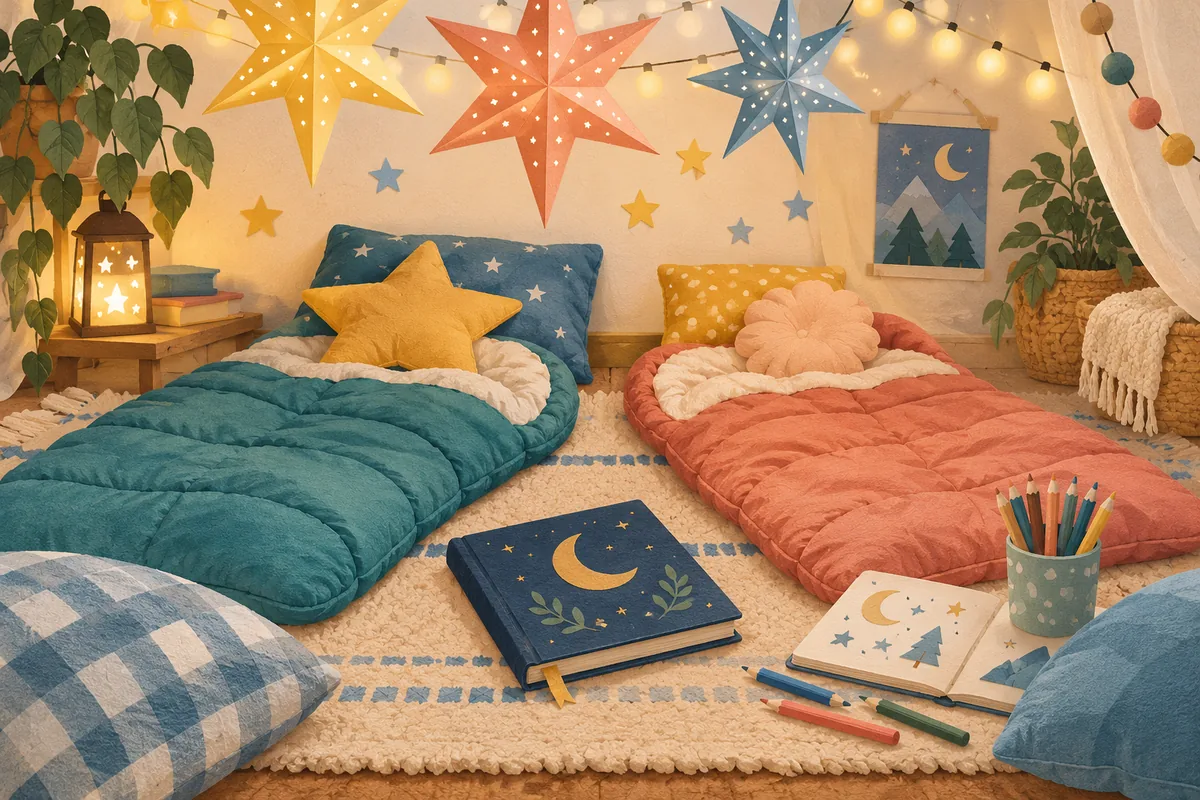
Start with today
Choose a starting point
Guests have just arrived
A short shared activity with clear turns
Check who wants to take part before starting the first round.
Children disagree about the main activity
Two suitable options to compare together
Keep both choices within the adult help and space available.
The room also needs to become a sleeping space
A low-mess card that can be packed away
Decide where supplies and unfinished work will go.
Someone wants a quieter break
An optional calm alternative with adult awareness
Agree how guests ask the host adult for help or a pause.
Start with the host adult's plan
Before guests arrive, agree the practical arrangements with their parents or carers, including how to contact them and any individual requirements they want the host to follow. Decide which adult is available through the evening. Children can help choose the activities, but the adult retains responsibility for the setting, supervision and changes to the plan.
Show guests the working area and explain how to ask for help or a break. Keep the first invitation modest: a short shared choice gives everyone a chance to settle into the group. Watching or choosing an alternative can remain an option. Arriving at a sleepover does not mean agreeing to every activity the host child has imagined.
Choose things that suit the actual group
A story about a missing suitcase and drawings of an imaginary holiday house offer two possible subjects for shared play. One can centre on talking and listening; the other on making pictures alongside each other. Choose suitable storytelling or drawing cards, then check how their group participation works. Other guests may prefer words, memory, puzzles or pretend play; compare their choices and the actual supplies together.
Give children a couple of checked choices instead of an open-ended promise to make anything happen. Ask how turns will work and whether anyone would prefer to pass. Avoid making the youngest guest keep up with an older group's choice. A different card or separate compatible options can fit better than repeatedly changing the same game's instructions.
Keep play and resting space workable
If one room serves several purposes, plan where activity materials sit and where they will be stored later. Low mess still allows for pieces, paper and unfinished work. Keep the route through the room usable and check the individual supervision guidance. These previews have no listed hazard badges, but that does not replace checking supplies and the setting.
Choose a clear point for packing away before the space is needed for resting. Guests can keep a drawing or note where it will not be lost among bedding and bags. Leave unrelated equipment stored rather than offering another activity automatically. The evening can change pace without needing a new game to fill every pause.
Make the ending part of the agreement
Tell the children the host adult's evening plan before starting, including when group activities will finish. A short card can be repeated when it still fits, or left after one round. Nobody has to keep playing to prove they enjoyed the sleepover. An available adult can help when preferences change or someone wants to contact home.
Store materials before the family's resting routine, keeping morning plans separate from the evening games. The list offers options rather than a schedule to finish. For another visit, keep the titles children would choose again alongside what you learned about the space and adult help required.
From the activity library
Find a real activity to try
Short, low-mess indoor group-play previews for ages 7–12 in storytelling, words, memory, puzzles, drawing and pretend play. Selected without hazard badges; compare each card with the host adult's actual evening plan.
You know your child best. Adapt or skip anything that doesn’t feel right, and supervise as noted. Read the full instructions and safety guidance before starting.
Previews are free to browse
Full steps, the tip and safety note cost 3 credits to unlock for an ordinary library card. Complete sample activities are free.