A parent’s guide to choosing
Activities for 1 year olds: make a small space for shared play
For a one-year-old, begin by choosing something you can share in the space and time available. A small invitation can fit between ordinary routines without becoming a planned session. The library groups ages 1–2 together; that band is a starting filter, so check each card's materials and supervision against your own child. There is no requirement to finish a project or try something new every day.
Browse free activity previews
Start with today
Choose a starting point
You can sit beside your child
One age-appropriate shared activity
Gather its supplies before beginning so your attention stays available.
You have a brief gap before another routine
A familiar option with little preparation
Count gathering and clearing away as well as activity time.
An older sibling wants to join
Separate materials within a shared theme
Keep older-child tools and small pieces outside the younger child's access.
Your child is interested in something else
A pause or familiar play already available
Store the unused materials and return to the invitation another time.
Make room for both of you
Choose a suitable place where an adult can participate comfortably and keep the whole setup in view. Check the surrounding floor, furniture and access to other belongings before bringing out materials. The activity's place label helps with choosing, but it does not describe the conditions in your particular room or outdoor area.
Put the necessary supplies within the adult's reach and keep everything else stored. If another job needs your attention, pause and put materials away first. Choose a different time or activity when you cannot provide the supervision required, rather than relying on the age label to make the setup manageable.
Inspect the actual materials
Read the individual materials list, hazard badges and full guidance before starting. An ordinary household item is not automatically suitable for play, and a material named on an older sibling's card may be inappropriate here. Avoid adding decorative extras or substituting something simply because it looks similar to the listed item.
The shared ages 1–2 band contains different activity types and supervision needs. Compare what each card asks of the adult as carefully as its duration. Select, adapt or skip it according to your child and setting; a collection filtered by age does not establish that every option suits every one-year-old.
Offer a beginning and follow the response
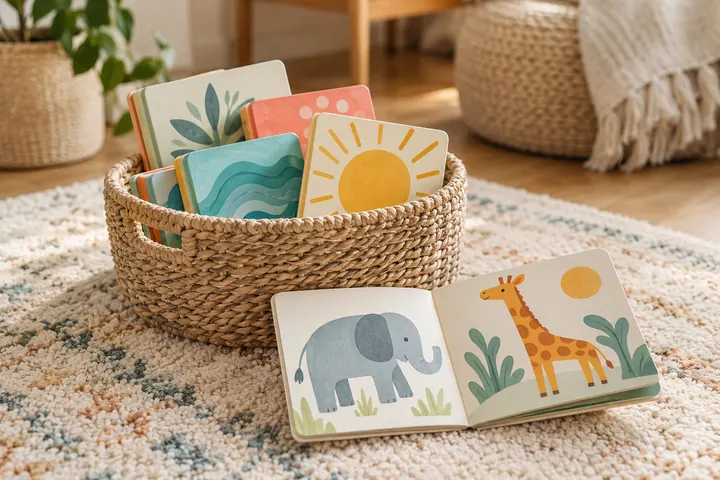
For an indoor starting point, Board Book Basket Browse lists a basket and books. Check whether you can sit together and stay available, then read the card before offering it. Where's Your Nose Game is a different candidate with no listed materials. Compare those setups when there is little room for supplies; neither title decides whether it fits your own child today.
If interest shifts, finish or pause rather than trying to complete an imagined session length. Put unused supplies away before changing direction. Watching, returning to a familiar object or stopping altogether can be today's choice; the card's suggested duration is information for planning, not a target your child must reach.
Keep a shortlist for ordinary gaps
Remember which setups fitted a real part of your day, including the preparation and cleanup. You might keep a shared indoor option and a suitable outdoor option in mind, checking conditions each time. Repeating something familiar needs no extra materials or harder version to justify doing it again.
Use the previews below to compare the ages 1–2 band, then open the age hub for a wider choice. These selections are not limited to one place, mood or activity length. Read the actual labels before choosing what fits the next gap and the adult participation you can offer.
From the activity library
Find a real activity to try
Public library previews from the shared ages 1–2 band, selected by age only. Compare place, materials, time and supervision, then check the full card for your child before starting.
You know your child best. Adapt or skip anything that doesn’t feel right, and supervise as noted. Read the full instructions and safety guidance before starting.
Previews are free to browse
Full steps, the tip and safety note cost 3 credits to unlock for an ordinary library card. Complete sample activities are free.