A parent’s guide to choosing
Activities for 2 year olds: offer a choice you can manage
A useful activity choice for a two-year-old starts with what you can actually set up and supervise. Offer a small number of suitable possibilities, then leave room to repeat a favorite or change direction. The library uses a shared ages 1–2 band, so these previews are not a separate rating for every child aged two. Compare the individual materials, place, time and adult help before deciding.
Browse free activity previews
Start with today
Choose a starting point
Your child wants to choose
Two suitable possibilities you can both manage
Compare the cards first and bring out supplies only after the choice.
A favorite activity is requested again
The familiar setup if it still fits today
Check its materials and supervision instead of automatically making it harder.
The room has to return to ordinary use
A setup with a clear place to put things away
Leave time for an adult to handle tidying that needs care.
You cannot stay available for the activity
Another suitable moment to begin
Keep materials stored until the required adult attention is available.
Make the first choice small
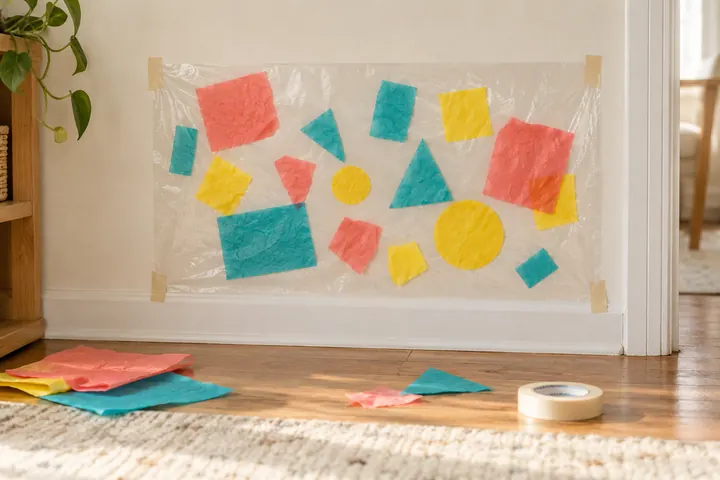
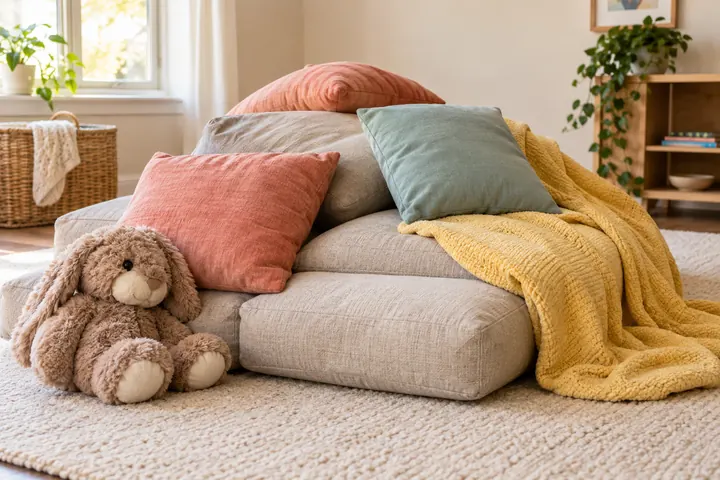
Offer a concrete contrast you can actually provide. Sticky Wall Tissue Art lists contact paper, tissue paper and masking tape for indoors; Cloud Shape Watching lists blankets for outdoors. After checking both cards, you might ask, 'A tissue-paper picture or cloud watching?' Bring out only the chosen setup. Either answer still needs your assessment of the materials, place and adult participation.
A choice can concern the activity while other practical limits stay with the adult. You decide which tools can be used, where play happens and when the space is needed again. Explain one useful boundary before starting, and choose another card if the original setup does not fit it.
Keep one setup within reach
Prepare the chosen activity before inviting your child into it. Keep unused supplies stored and check access to nearby belongings, including an older sibling's materials. The aim is a space you can supervise comfortably, with enough room for adult participation whenever the card or your child requires it.
Read the full instructions alongside the preview's materials and hazard badges. Household and craft labels describe supply categories, not permission to substitute any item from the cupboard. If something is missing or unsuitable for your child, choose a different card. Pause and store materials before you leave to deal with another task.
Repeat without adding a new challenge
When your child asks for a familiar activity, check whether the previous setup still suits today's place and time. It can be repeated in its ordinary form. There is no need to introduce extra pieces, a more difficult goal or a finished product simply because you have tried it before.
Keep track of the practical parts that worked: preparation you could manage, materials already available and an ending that fitted the next routine. If one part caused difficulty, look for another card with a more suitable setup. A favorite can remain on your shortlist while other options wait.
Plan the help and the ending
Check how much adult participation the card calls for before starting. An activity lasting a few minutes may still need your full attention throughout. Tell your child when you will need to finish, then leave time to gather supplies. An adult handles tools and cleaning products; keep those products away from play.
These previews use only the ages 1–2 filter. Compare each card's location, mood and duration rather than assuming every option is short or indoors. Use those labels to narrow today's choice. For a closer match, browse the age hub or use the finder with your actual setting.
From the activity library
Find a real activity to try
A starting selection from the shared ages 1–2 library band. Age is the only selection filter; compare each preview's place, materials, duration and supervision with your two-year-old's circumstances.
You know your child best. Adapt or skip anything that doesn’t feel right, and supervise as noted. Read the full instructions and safety guidance before starting.
Previews are free to browse
Full steps, the tip and safety note cost 3 credits to unlock for an ordinary library card. Complete sample activities are free.