A parent’s guide to choosing
Fine motor activities for ages 1–6: choosing hands-on play
Hands-on play can mean grasping, arranging, sorting, drawing or making something. Start with your child's interest, then find a card whose materials and adult role fit the day. Fine motor describes a library category, not a child's ability. This collection includes different kinds of play for ages 1–6, so read each preview alongside its label.
Browse free activity previewsStart with today
Choose a starting point
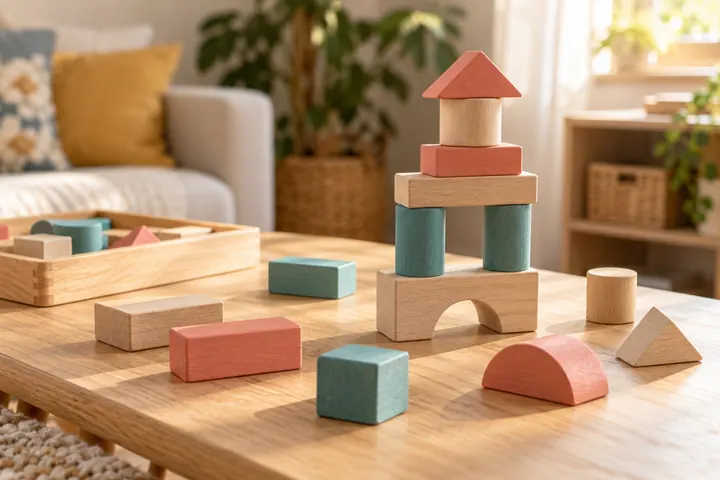
Your child wants to handle and arrange things
A preview centred on grasping, placing or sorting
Check the actual objects and supervision guidance before offering them.
Your child is asking to draw
A drawing card from their own age band
Look at the named tools and surface rather than assuming pencil work.
Two children want to join in
Compatible cards with separate working places
Keep each child's supplies within the setup you can supervise.
You need to clear the table soon
A short activity with little preparation
Include gathering materials and putting them away in your time plan.
Choose the action that sounds appealing
Ask whether your child wants to handle objects, make a picture or create something with a purpose. Those interests can lead to quite different activities, even within the same category. Offer a couple of suitable previews instead of a large list. The child can choose the invitation without needing to explain why one kind of play sounds better today.
Read each preview before deciding that two cards are interchangeable. Drawing and sorting do not use identical materials or ask for identical actions. You can choose a familiar favourite or something different. There is no need to organise the afternoon around proving that the child can complete a task.
Read the label alongside the materials
Fine motor is a catalogue description, not a developmental milestone, an assessment or a promise of improvement. The collection contains several activity types. It does not mean that every preview uses a pencil, scissors or the same hand movements. Use the title, materials and first-step preview to understand the actual choice, then open the card for its full instructions.
Begin with the child's age band and check each named supply. A familiar household object is not automatically a suitable play material for every child. These previews are selected without hazard badges, but that filter does not replace the individual card's guidance. If the materials or adult help required do not fit, choose a different activity.
Make room for the adult's part
For ages 1–2, choose their own age band and plan to participate. For ages 3–4, check what the chosen card asks the adult to prepare, demonstrate or help with during play. Put out the supplies for that activity, leaving unrelated tools elsewhere. A clear working place lets you see what is being used and what needs your attention.
For ages 5–6, ask which parts they would like to do while keeping the card's supervision requirements. Choosing a design or colour is different from deciding who handles a tool. If siblings join, keep older-child supplies separate and check whether you can meet both cards' adult requirements. Separate sessions are an option when you cannot.
Let the session have an ordinary ending
Decide whether the ending is one short round, a finished page or a pause before the next family routine. Tell the child while choosing, so stopping is part of the plan. Some days they may want to repeat a familiar action; on others they may lose interest quickly. You can finish without adding another task to make the session seem more complete.
Leave a place for work the child wants to keep, and return unused materials to storage. Ask which part they enjoyed as a clue for next time. Their preference can guide your next choice without turning play into a progress check. Keep a small shortlist of cards whose setup you already understand.
From the activity library
Find a real activity to try
Activity previews for ages 1–2, 3–4 and 5–6 in the library's fine motor category, selected without hazard badges. Compare the actual actions, supplies and adult role; the category includes several types of play.
You know your child best. Adapt or skip anything that doesn’t feel right, and supervise as noted. Read the full instructions and safety guidance before starting.
Previews are free to browse
Full steps, the tip and safety note cost 3 credits to unlock for an ordinary library card. Complete sample activities are free.